
Global researchers used shared trial data to advance work in cancer, diabetes, and clinical trial design.
The Vivli Global Ambassador Program brought together a diverse group of researchers selected for their commitment to data transparency and leadership in advancing clinical research around the world. Through their use of shared clinical research data, these Ambassadors help promote responsible data sharing and reuse within their fields. Over the past year, the inaugural cohort has shown how data available through Vivli can be incorporated into active research programs to generate new findings, support scientific exchange, and create new opportunities for collaboration. One of the most important contributions of the program has been visibility. For many researchers, data reuse remains unfamiliar despite growing expectations around data sharing. Ambassadors helped bridge that gap by sharing their experiences at major scientific meetings and academic seminars across four continents, from the European Society for Radiation Oncology meeting in Vienna and the International Congress on Lung Cancer in Barcelona, to the Princess Takamatsu Symposium in Tokyo, the IATDMCT meeting in Singapore, and the Vivli Annual Meeting in Cambridge, Massachusetts. In each setting they discussed both the outcomes of their work and the practical realities of conducting secondary research, walking colleagues through everything from the data application process to study design, and introducing investigators across disciplines to approaches that are increasingly shaping the research landscape. What follows is a closer look at the work of the individual ambassadors.
Dr. David McAllister (University of Glasgow, Scotland) used Vivli individual participant data (IPD) to drive a productive year of diabetes and trial-methodology research, publishing four peer-reviewed papers in 2025. These included a network meta-analysis of age and sex differences in the efficacy of treatments for type 2 diabetes, published in JAMA, and an IPD meta-analysis of frailty across trials of glucose-lowering therapies, published in PLOS Medicine, alongside further work on trial representativeness and trial attrition. Beyond his own publications, Dr. McAllister presented on Vivli as a research resource at the universities of Bristol, Edinburgh, and Glasgow and at an EU doctoral training network, is supervising PhD students working directly with Vivli IPD, and drew on his established relationship with Vivli to strengthen several major grant applications and new institutional collaborations.
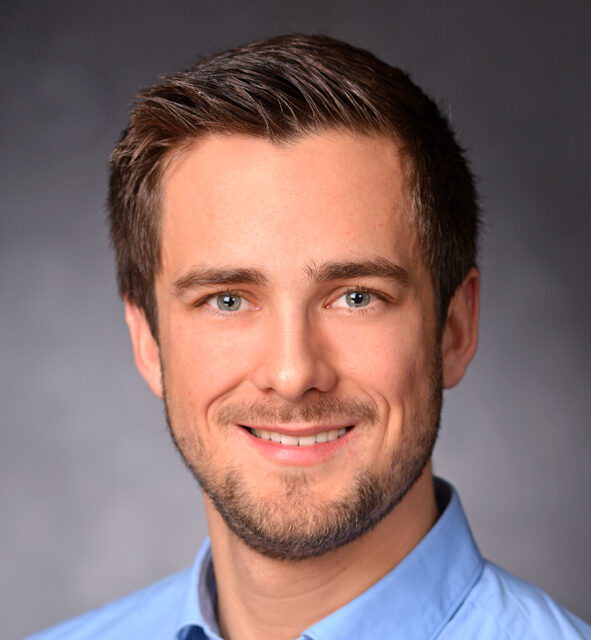
Dr. Jonas Saal (University Hospital Bonn, Germany) focused his ambassador year on immuno-oncology biomarkers, presenting Vivli-derived analyses of the modified Glasgow Prognostic Score (mGPS) and progressive-disease classification — including its use in selecting patients for treatment beyond progression — at oncology and urology meetings such as the DGHO annual meeting and the AIO Herbstkongress, where his work earned a Young Investigator Award. His written output included a review in the European Journal of Cancer on sodium and immunotherapy and a Frontiers in Immunology article on mGPS in hepatocellular carcinoma, building on a body of Vivli-based publications spanning immunotherapy beyond progression, metastatic urothelial carcinoma, and metastatic renal cell carcinoma. He described Vivli as “an enabler of collaborative, methodologically rigorous secondary research.”

Dr. Youssef Zeidan (Baptist Health South Florida, USA) advanced his breast cancer research program through Vivli, completing a pooled analysis of the TRYPHAENA and NeoSphere trials examining radiation therapy in clinically node-positive, HER2-positive breast cancer. “The VIVLI Ambassador program provided an outstanding opportunity to support my ongoing breast cancer research initiatives,” he wrote. The findings were presented at the European Society for Radiation Oncology (ESTRO) annual meeting in Vienna and published in BMC Cancer. The project also became a mentorship opportunity: the trainee who led the analysis, a medical student, went on to match into radiation oncology at Stanford. Dr. Zeidan’s continued partnership with Vivli has since produced a newly approved project applying the same approach to triple-negative breast cancer.
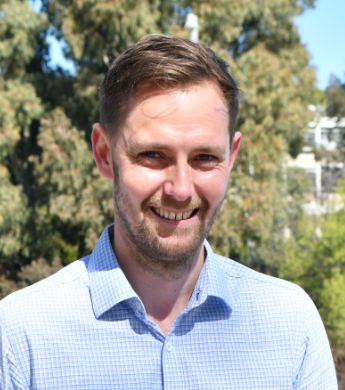
Dr. Ashley Hopkins (Flinders University, Australia) drew on Vivli-accessed data to investigate how concomitant medicines and patient characteristics shape cancer outcomes, with written outputs including studies on concomitant medicines and patient-reported outcomes in chronic lymphocytic leukemia, a large-scale IPD meta-analysis of sex-based differences in solid-tumour outcomes (accepted in the Journal of the National Cancer Institute), and a breast-cancer outcomes paper led by a member of his team, Dr. Bradley Menz. Dr. Hopkins shared this work through an invited talk at IATDMCT 2025 in Singapore and an industry session on AI in oncology, while his engagement with the South Australian Comprehensive Cancer Network is now feeding directly into a new collaborative Vivli application on youth-onset cancers — and contributed to a PhD completion incorporating Vivli-derived work.

Dr. Diego Chowell (Icahn School of Medicine at Mount Sinai, USA) championed responsible data sharing within the AI and computational immuno-oncology community, weaving the case for transparent, well-governed clinical and trial datasets into talks on tumor evolution, immune recognition, and immunotherapy response prediction at Princeton University, the Princess Takamatsu Symposium in Tokyo, the International Congress on Lung Cancer in Barcelona, and a scientific seminar at VHIO. His central message, that robust, externally validated AI models depend on access to shared, reusable data, resonated with audiences of oncologists, computational biologists, and trialists. He is now developing a Vivli data request to externally validate his SCORPIO model for immune-risk prediction and trial stratification, laying the groundwork for a future Vivli-enabled analysis.
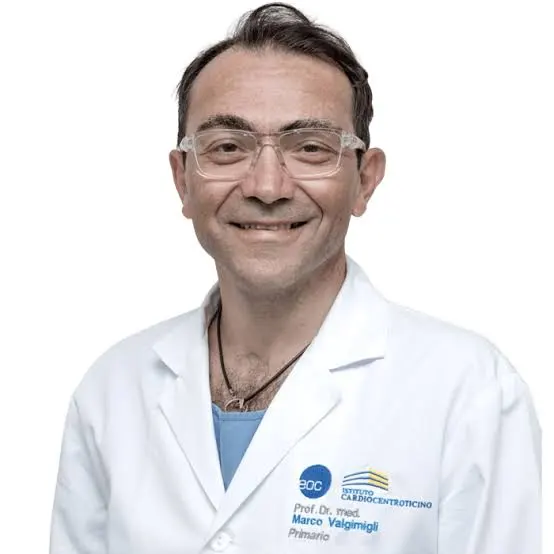
Dr. Marco Valgimigli (Cardiocentro Ticino Institute, Ente Ospedaliero Cantonale, Lugano, Switzerland) carried the case for responsible clinical-trial data sharing into the interventional cardiology and cardiovascular pharmacology community, anchored in his own Vivli-enabled work. As Lead Investigator of the PANTHER collaborative initiative — an individual patient data meta-analysis comparing P2Y12 inhibitor monotherapy with aspirin for secondary prevention in coronary artery disease, conducted using datasets accessed through Vivli and published in the Journal of the American College of Cardiology — he was able to present a completed, peer-reviewed project as a concrete proof of concept. He brought that example to talks and discussions at ESC Congress 2025 in Madrid, the inaugural EAPCI Summit 2026 in Munich, and FOKUS HERZ BERN 2026, and to direct engagement with trainees and collaborators at Cardiocentro Ticino, walking colleagues through the full arc of a Vivli data request to show how shared participant-level data enable rigorous, academically independent secondary research.