

News & Events

Vivli Researcher Spotlight: Improving mentorship and clinical practice in breast cancer care with Vivli

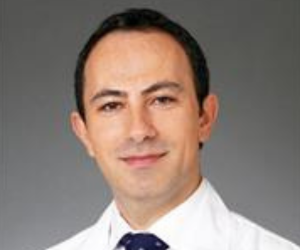
Youssef Zeidan is a radiation oncologist at the Lynn Cancer Center, part of Baptist Health South Florida. Dr. Zeidan was previously an assistant professor of radiation oncology at the American University of Beirut, where he mentored several students who are now working at cancer centers and universities throughout the United States. Dr. Zeidan and his team have authored more than 50 publications related to radiation oncology. He was also part of the committee that developed the 2025 American Society for Radiation Oncology, American Society of Clinical Oncology, and Society of Surgical Oncology guideline on postmastectomy radiation therapy. His contributions to that committee drew upon research conducted with the Vivli platform.

In the extended interview below, Dr. Zeidan discusses how his work with Vivli has influenced both his medical practice and mentorship. Responses have been edited for length and clarity.

Watch the video: Dr. Zeidan discusses how his research with Vivli informs his clinical practice

How did you first learn about Vivli?  

I learned about Vivli first from a colleague at a medical conference that I was attending, and it’s been a great journey since then. I’m very thankful for the circumstances. We were at a conference for breast cancer, and they shared with me that I could access clinical trial data through Vivli.

What made you interested in using the platform?  

Once I started looking at Vivli, I found it very helpful in asking clinically relevant questions, especially in my domain, which is radiation therapy for breast cancer. Over the past seven years, Vivli has been a great partner in answering key questions in radiation therapy that are relevant to breast cancer patients. We run into situations in treating breast cancer where there are a lot of grey zones, and we don’t have available clinical trial data. Vivli has been a great platform for doing secondary analysis and trying to answer those questions.

Why is Vivli so important for your area of research?

Radiation therapy uses high energy x-rays to treat cancer patients, in my case breast cancer. Vivli has this unique ability to capture data about radiation therapy even though the trials did not specifically ask about the impact of radiation therapy in breast cancer.

For us, it’s a tremendous resource to repurpose and re-analyze those trials for secondary objectives to see the impact of radiation therapy, rather than the drug that the trial is trying to evaluate. In order to do that, we have to do it in a very balanced manner, in a very efficient manner. It takes a tremendous effort from the statisticians, the physicians, the people collecting data, and our partners at Vivli to bring it to an outcome. 

How have you used Vivli as a tool for mentorship?  

Many of my research team members started as medical students working with me as their advisor. Some of them have now taken faculty positions in very important cancer centers. It’s very rewarding to see the impact of that work, not only in terms of scientific value, but also in terms of the humanitarian value and what happens to the careers of the individuals who are conducting the research.

As a faculty member, I always had students that knocked on my door; they love to be involved in research, love to have projects. The interest is genuine—so to have these students with that drive to answer clinical questions that are out there is huge for us. Having a platform that is willing to partner with us as researchers and help us mentor the younger generation of researchers made the experience even better.

The supervision part was important, but once they get the hang of the Vivli platform and they know how to access the dataset, it really goes by much more effectively and efficiently. It’s a process from accessing the raw data to extracting it, analyzing it, making charts, and then sharing it, whether in terms of presentations or manuscripts. All of these steps from accessing data to analyzing to sharing, whether in terms of a conference or a paper, are different stations and different opportunities for mentoring people who are entering into the medical workforce. For me, looking forward at what those students—and now physicians—are doing and how they’re going to carry that into their own careers and mentor the next generation, it’s really an exponential impact.

You practice medicine, as well as researching. Can you tell us a bit about how continuing to practice medicine affects your perspective as a researcher?  

My practice is primarily breast cancer. A lot of the cases that we see are challenging and don’t have a straightforward answer, and we have to scratch our heads to find the optimal treatments according to the best evidence. In doing that process and seeing patients in the clinic, we come up with new questions that we don’t have an answer to every day.

Vivli is an excellent partner and a resource for us to inquire about those questions and find answers through rigorous clinical research and secondary analyses. It really takes a village to come up with answers and clinically meaningful outcomes.  I find this exercise of coming up with questions in the clinic, taking them back to the research drawing board, and bringing those answers back to the clinic to be a very fruitful one.

Your research was recently cited in the updated guideline for breast cancer radiation therapy. Could you talk a bit about that?

Recently, the American Society for Radiation Oncology (ASTRO) decided to update their guideline for radiation therapy for breast cancer. The prior guideline was 11 years old. You can imagine how much new data became available, whether from our group or others, during this 11-year period. Fortunately, they recognized this as an area of need.

The part that was assigned to me to lead as part of the committee was actually the part that I had researched using the data provided by Vivli, so it was full circle for me. What we’ve done is to capture data that came up, including secondary analyses from clinical trials—using data like that available from Vivli—and cite that data as evidence for guiding practitioners on how to treat specific types of breast cancer cases with radiation therapy.

Thinking about your patients, is that what you hope the outcome will be? Something like that guideline?

There is not a single case that we see in the clinic that is identical to the prior case. Each case is unique in several aspects. In situations where the quality of the evidence is not very high or there are grey zones where we lack evidence, I share that with my patients. Being focused and specialized in a certain domain really gives you that edge to bring to your patients the latest and greatest research, rather than having them use open, non-resource-verified sources online. Making that step easier on the patients at a time when they have so many things on their plate is very important.

What Vivli is doing on a bigger scale is really impacting healthcare in so many ways, specifically cancer care. I’m grateful for having the opportunity to use Vivli for research, and I think the process made me a better physician for my patients.

Publications

Vivli aims to advance human health through clinical research data sharing. One of the key ways we support this is through the Vivli platform, which facilitates data sharing for research teams working on a range of topics. These tables provide details of approved research proposals that have published or presented their results.

Top publications by PubMed citations

YearData Request IDLead InvestigatorInstitutionResearch Proposal TitlePublicationData Contributor(s)Altmetric ScorePubMed Citation Total
20236104Pratik Sinha Washington University Heterogeneous treatment effects in molecular phenotypes of sepsisSinha, P., Kerchberger, V.E., Willmore, A., Chambers, J., Zhuo, H., Abbott, J., Jones, C., Wickersham, N., Wu, N., Neyton, L. and Langelier, C.R., 2023. Identifying molecular phenotypes in sepsis: an analysis of two prospective observational cohorts and secondary analysis of two randomised controlled trials. The Lancet Respiratory Medicine.

Doi:10.1016/S2213-2600(23)00237-0
Lilly
81
20215096Joo Sang LeeSamsung Medical Center, South KoreaHarnessing genetic interactions to advance precision cancer medicineSynthetic lethality-mediated precision oncology via the tumor transcriptome. Lee, Joo Sang et al.
Cell, Volume 184, Issue 9, 2487 - 2502.e13.

doi: 10.1016/j.cell.2021.03.030
Tempus AI, Inc.
69
20234113Lesley Inker Tufts Medical Center Chronic Kidney Disease Epidemiology - Clinical Trials Consortium (CKD-EPI CT)Inker, L.A., Collier, W., Greene, T., Miao, S., Chaudhari, J., Appel, G.B., Badve, S.V., Caravaca-Fontán, F., Del Vecchio, L., Floege, J. and Goicoechea, M., 2023. A meta-analysis of GFR slope as a surrogate endpoint for kidney failure. Nature Medicine, pp.1-10.

Doi: 10.1038/s41591-023-02418-0
GlaxoSmithKline, Takeda
54
20204540Chris GaleUniversity of LeedsEfficacy and safety of edoxaban versus warfarin in patients with atrial fibrillation and frailty insights from the ENGAGE AF-TIMI 48 trialWilkinson, C., Wu, J., Searle, S.D. et al. Clinical outcomes in patients with atrial fibrillation and frailty: insights from the ENGAGE AF-TIMI 48 trial. BMC Med 18, 401 (2020).

doi: 10.1186/s12916-020-01870-w
Daiichi Sankyo
54
20237875Marco ValgimigliCardiocentro Ticino, Lugano and Universita della Svizzera ltaliana (USI)P2Y12 inhibitor or Aspirin moNoTHERapy as secondary prevention in patients with coronary artery disease: in individual patient data meta-analysis (PANTHER collaborative initiative)Gragnano F, Cao D, Pirondini L, Franzone A, Kim HS, von Scheidt M, Pettersen AÃ…, Zhao Q, Woodward M, Chiarito M, McFadden EP, Valgimigli M. PANTHER. P2Y12 inhibitor or aspirin monotherapy for secondary prevention of coronary events. Journal of the American College of Cardiology. 2023 Jul 11;82(2):89-105.

doi: 10.1016/j.jacc.2023.04.051
Sanofi
51
20224116Sharon StraussSt. Michael’s HospitalComparative safety and effectiveness of cognitive enhancers for Alzheimer's dementia a systematic review and individual patient data network meta-analysisVeroniki AA, Ashoor HM, Rios P, et al. Comparative safety and efficacy of cognitive enhancers for Alzheimer’s dementia: a systematic review with individual patient data network meta-analysis BMJ Open 2022;12:e053012.

doi: 10.1136/bmjopen-2021-053012
AbbVie
50
20227074Gregory YH LipUniversity of LiverpoolImpact of atrial fibrillation and the effects of comorbidities and treatment on disease progression and outcomesRomiti GF, Proietti M, Bonini N, Ding WY, Boriani G, Huisman MV, Lip GYH; GLORIA-AF Investigators. Clinical Complexity Domains, Anticoagulation, and Outcomes in Patients with Atrial Fibrillation: A Report from the GLORIA-AF Registry Phase II and III. Thromb Haemost. 2022 Aug 29.

doi: 10.1055/s-0042-1756355
Boehringer Ingelheim
50
20204116Sharon StrausSt. Michael's HospitalComparative safety and effectiveness of cognitive enhancers for Alzheimer's dementia a systematic review and individual patient data network meta-analysisVeroniki AA, Ashoor H, Rios P, Seitidis G, Mavridis D, Holroyd-Leduc J, Straus S, Tricco A. Comparative safety and efficacy of cognitive enhancers for Alzheimer’s dementia: An individual patient data network meta-analysis. In: Advances in Evidence Synthesis: special issue. Cochrane Database of Systematic Reviews 2020;(9 Suppl 1):455.

doi: 10.1002/14651858.CD202001
AbbVie
50
20205895, 6117Ashley HopkinsFlinders UniversityPredictors of exposure, therapeutic and adverse effects of atezolizumab used in the treatment of advanced cancersConcomitant Proton Pump Inhibitor Use and Survival in Urothelial Carcinoma Treated with Atezolizumab. Ashley M. Hopkins, Ganessan Kichenadasse, Christos S. Karapetis, Andrew Rowland and Michael J. Sorich.
Clin Cancer Res October 15 2020 (26) (20) 5487-5493;

doi: 10.1158/1078-0432.CCR-20-1876
Roche
49
20224329Shomron Ben-HorinSun Yatsen 1st affiliated HospitalEfficacy of biologic drugs in short-duration versus long-duration inflammatory bowel diseaseShomron Ben-Horin, Lena Novack, Ren Mao, Jing Guo, Yue Zhao, Ruslan Sergienko, Jian Zhang, Taku Kobayashi, Toshifumi Hibi, Yehuda Chowers, Laurent Peyrin-Biroulet, Jean Frederic Colombel, Gilaad G. Kaplan, Min-hu Chen. Efficacy of biologic drugs in short-duration versus long-duration inflammatory bowel disease: A systematic review and an individual-patient data meta-analysis of randomized controlled trials. Gastroenterology, 2021, ISSN 0016-5085.

doi: 10.1053/j.gastro.2021.10.037
AbbVie, Biogen, Johnson & Johnson, Takeda, UCB
48


Top publications by Altmetrics score

YearData Request IDLead InvestigatorInstitutionResearch Proposal TitlePublicationData Contributor(s)Altmetric ScorePubMed Citation Total
20259813Sameer JauharKing's College LondonConducting a systematic review and meta-analysis to assess the incidence and severity of withdrawal symptoms following discontinuation of antidepressantsKalfas, Michail, Tsapekos, Dimosthenis, Butler, Matthew, McCutcheon, Robert A., Pillinger, Toby, Strawbridge, Rebecca, Bhat, Bhagyashree Bhaskar, Haddad, Peter M., Cowen, Philip J., Howes, Oliver D., Joyce, Dan W., Nutt, David J., Baldwin, David S., Pariante, Carmine M., Lewis, Gemma, Young, Allan H., Lewis, Glyn, Hayes, Joseph F. and Jauhar, Sameer. "Incidence and Nature of Antidepressant Discontinuation Symptoms." JAMA Psychiatryvol. , no. , Jul. 2025, pp.

https://doi.org/10.1001/jamapsychiatry.2025.1362
Lilly, Lundbeck, Pfizer, Takeda
N/A
20236544Angela WuUniversity of OxfordInvestigating the association between smoking cessation and mental health in people with and without psychiatric disordersWu, A.D., Gao, M., Aveyard, P. and Taylor, G., 2023. Smoking Cessation and Changes in Anxiety and Depression in Adults With and Without Psychiatric Disorders. JAMA Network Open, 6(5), pp.e2316111-e2316111.

Doi: 10.1001/jamanetworkopen.2023.16111
Pfizer
17
20255959John Dennis University of Exeter Medical School Stratification of SGLT2 inhibitor glucose lowering therapy in Type 2 diabetesDennis, J.M., Young, K.G., Cardoso, P., Güdemann, L.M., McGovern, A.P., Farmer, A., Holman, R.R., Sattar, N., McKinley, T.J., Pearson, E.R. and Jones, A.G., 2025. A five-drug class model using routinely available clinical features to optimise prescribing in type 2 diabetes: a prediction model development and validation study. The Lancet.

Doi: 10.1016/S0140-6736(24)02617-5
Boehringer Ingelheim, Takeda
N/A
20237875Marco ValgimigliCardiocentro Ticino, Lugano and Universita della Svizzera ltaliana (USI)P2Y12 inhibitor or Aspirin moNoTHERapy as secondary prevention in patients with coronary artery disease: in individual patient data meta-analysis (PANTHER collaborative initiative)Gragnano F, Cao D, Pirondini L, Franzone A, Kim HS, von Scheidt M, Pettersen AÃ…, Zhao Q, Woodward M, Chiarito M, McFadden EP, Valgimigli M. PANTHER. P2Y12 inhibitor or aspirin monotherapy for secondary prevention of coronary events. Journal of the American College of Cardiology. 2023 Jul 11;82(2):89-105.

doi: 10.1016/j.jacc.2023.04.051
Sanofi
51
20257810Diego Chowell Icahn School of Medicine at Mount Sinai Machine learning model to predict cancer immunotherapy responseYoo, S.K., Fitzgerald, C.W., Cho, B.A., Fitzgerald, B.G., Han, C., Koh, E.S., Pandey, A., Sfreddo, H., Crowley, F., Korostin, M.R. and Debnath, N., 2025. Prediction of checkpoint inhibitor immunotherapy efficacy for cancer using routine blood tests and clinical data. Nature Medicine, pp.1-12.

Doi: 10.1038/s41591-024-03398-5
Roche
N/A
20259492, 8697 David McAllister University of Glasgow Understanding frailty, multimorbidity and renal failure in clinical trials: Attrition, retention and heterogeneity of treatment effects in trials for diabetes, cancer and a heterogenous set of index conditionsHanlon P., Butterly, E., Wei L. Age and Sex Differences in Efficacy of Treatments for Type 2 Diabetes. 2025. A Network Meta-Analysis. JAMA.

Doi: 10.1001/jama.2024.27402
AstraZeneca, Boehringer Ingelheim, GlaxoSmithKline, Johnson & Johnson, Lilly, Roche, Sanofi, Takeda, UCB
20237743Caroline Quach CHU Sainte-Justine Is there a Difference in the Immune Response, Efficacy, and Safety of Seasonal Influenza Vaccine in Males and Females? - A Meta-AnalysisKiely, M., Tadount, F., Lo, E., Sadarangani, M., Wei, S.Q., Rafferty, E., Quach, C. and MacDonald, S.E., 2023. Sex differences in adverse events following seasonal influenza vaccines: a meta-analysis of randomised controlled trials. J Epidemiol Community Health.

Doi: 10.1136/jech-2023-220781
Sanofi
4
20225933, 5208Ahmad AbuhelwaUniversity of South AustraliaPredictors of exposure, therapeutic and adverse effects of certolizumab pegol and baricitinib used in the treatment of rheumatoid arthritisDaraghmeh DN, Hopkins AM, King C, Abuhelwa AY, Wechalekar MD, Proudman SM, Sorich MJ, Wiese MD. Female reproductive status and exogenous sex hormone use in rheumatoid arthritis patients treated with tocilizumab and csDMARDs. Rheumatology (Oxford). 2022 Jun 22:keac357.

doi : 10.1093/rheumatology/keac357
Roche
2
20235951, 4543Mathilde NijkeuterUMC UtrechtIndividualized prediction of recurrence risk reduction and risk of bleeding with extended anticoagulation in patients with venous thromboembolismMaria A de Winter, Harry R Büller, Marc Carrier, Alexander T Cohen, John-Bjarne Hansen, Karin A H Kaasjager, Ajay K Kakkar, Saskia Middeldorp, Gary E Raskob, Henrik T Sørensen, Frank L J Visseren, Philip S Wells, Jannick A N Dorresteijn, Mathilde Nijkeuter, VTE-PREDICT study group. Recurrent venous thromboembolism and bleeding with extended anticoagulation: the VTE-PREDICT risk score. European Heart Journal, 2023;. ehac776.

doi: 10.1093/eurheartj/ehac776
Boehringer Ingelheim, Daiichi Sankyo
18
20237164Jörg EllingerUniversity Hospital BonnEvaluation of CRP (c-reactive protein) flare phenomena as an early predictor of response to the Atezolizumab + Bevacizumab therapy in renal cell carcinomaSaal, J., Bald, T., Eckstein, M., Ralser, D.J., Ritter, M., Brossart, P., Grünwald, V., Hölzel, M., Ellinger, J. and Klümper, N., 2023. Integrating On-Treatment Modified Glasgow Prognostic Score and Imaging to Predict Response and Outcomes in Metastatic Renal Cell Carcinoma. JAMA oncology.

doi: 10.1001/jamaoncol.2023.1822
Roche
13

Publications by year

Vivli Metrics

metricsVivli aims to advance human health through clinical research data sharing. One of the key ways we support this is through the Vivli platform, which facilitates data sharing. Vivli platform metrics as of 31 Dec 2025. The metrics are updated quarterly.