News & Events

Top five questions small and mid-size companies should ask before embarking on a data sharing program

By Rebecca Li, Vivli Executive Director

I started my career at a small biotech company and understand the intensity of the start-up experience as well as the experience of the more mature mid-size biotech and pharma company. Data sharing can be an after-thought to the challenges of bringing treatments to the clinic. We at Vivli often receive inquiries along the lines of: “When should we start implementing a ‘real’ data sharing program?”  The inquiries run the gamut from companies just beginning their data sharing journey to those that have done this proficiently.  We know many who have started to outgrow homegrown sharing systems and processes that functioned well initially, and now the rate of incoming enquiries may be more than those systems can handle. Companies beginning the data sharing journey may be clinically early stage or have a marketed drug.

What’s it take to get serious about data sharing?  Some questions and answers may help.

Why should we share?

There are numerous ethical reasons to share clinical trial data responsibly.  Various industry organizations have set public commitments for their members as principles. For example, BIO a trade association that represents thousands of small and mid-size biotechnology members, committed in 2014 to make transparent and facilitate the process for qualified data requests of individual participant level data for approved medicines [1]. Likewise PhRMA/EFPIA[2] and IFPMA[3], influential trade organizations in the US and internationally for the industry, have committed to data sharing for the pharmaceutical industry

When should we begin the program?

If a company has one or more programs in late-stage clinical development, then 18 months prior to either marketing authorization or regulatory decision is a realistic timeframe to seriously considering putting a data sharing program in place. Like most things in life, starting the planning earlier allows for a high-quality program to be implemented with greater degrees of freedom. Therefore, if you anticipate that there will be trial data to share within the next 18 months or less it is important to start the planning process for a data sharing program now.

How do we start to build a data sharing program?

A data sharing program consists of three primary components – a Policy, a Mechanism and the Resources to manage and oversee the program – we describe these components in brief below. A Policy for data sharing typically includes a written public statement for governance (covering areas such as which trials are available for sharing, when those data are available, who is qualified to make a request and how, and whether there are exceptions to these policies). Additionally, a Data Use Agreement – the legally binding agreement which governs data access to outside researchers – should be developed to protect all parties involved including the research participants. A Mechanism for data sharing should be described – this is the IT infrastructure, portal or platform management system that has been developed to manage the data sharing program. Lastly, sufficient Resources (human and capital) should be tapped to oversee and implement the program and scalable to meet demand once Policy and Mechanism are set in place.

If you are interested in learning more you can watch the webinar.

How can we manage a data sharing program?

On your own internally or through a trusted external partner. Similar to other partnering decisions such as the tactical use of a CRO, externally managed mechanisms for data sharing exist.  If there are available resources internally that are capable of initiating this effort – they should also be available to oversee and sustain this effort over time. Internal efforts, may be typically comprised of a multi-functional team drawn from biostatistics, clinical data disclosure, biometrics and at times members from other functions such as medical writing, program management, legal, IT, and clinical operations are called upon for their expertise.

What can partners like Vivli do for us?

VIVLI was established several years ago and offers our members a comprehensive data sharing program including Policies, a Mechanism for data sharing and Resources. This includes assistance with setting up policies and access to harmonized legal agreements that are already vetted with a broad range of stakeholders. Additionally, the Vivli team can advise your leadership if necessary on public-facing data sharing policies for public or private organizations and will discuss a solution tailored to your current situation. The Vivli platform is user-friendly and flexible, and provides a team – an extension of yours – to ensure seamless data sharing.

If you are interested in learning more you can watch the webinar.

[1] https://www.bio.org/articles/bio-principles-clinical-trial-data-sharing

[2] https://www.phrma.org/press-release/joint-efpia-phrma-principles-for-responsible-clinical-trial-data-sharing-become-effective-today

[3] https://www.ifpma.org/wp-content/uploads/2010/11/IFPMA-Principles_Data-Sharing-FINAL-w-QA-vF.pdf

Boehringer Ingelheim joins Vivli as a new member

Boehringer Ingelheim will share patient level clinical study data with broad scientific community

“We are delighted to include Boehringer Ingelheim studies on the Vivli platform,” said Rebecca Li, Vivli Executive Director. “Leaders such as Boehringer Ingelheim are joining platforms such as Vivli to drive scientific discovery through data sharing to advance human health.”

Boehringer Ingelheim is a global, research-driven pharmaceutical company embracing many cultures and diverse societies. In joining Vivli, Boehringer Ingelheim demonstrates their strong commitment to clinical trial data sharing, to promote transparency and drive new discoveries. Boehringer Ingelheim supports Vivli’s mission, which is to promote, coordinate, and facilitate scientific sharing and reuse of clinical research data through the implementation of a sustainable global data-sharing enterprise.

“Pharmaceutical companies like us generate year by year a wealth of clinical drug development data which – after regulatory submission and evaluation – represent an invaluable asset for independent researchers to improve various public health aspects. Technology nowadays allows easy sharing of such huge data streams and Boehringer Ingelheim  would like to contribute to the expansion of this knowledge by providing our own data, which has been created by our more than 7000 employees in R+D worldwide and the health care personnel and patients we work with,” says Hans-Juergen Lomp, Head of Global Statistics.

For more information about how Boehringer Ingelheim shares data on Vivli, please visit their Member page. For additional information about Membership in Vivli, learn more here.

About Boehringer Ingelheim

Improving the health and quality of life of patients is the goal of the research-driven pharmaceutical company Boehringer Ingelheim. The focus in doing so is on diseases for which no satisfactory treatment option exists to date. The company, therefore, concentrates on developing innovative therapies that can extend patients’ lives. In animal health, Boehringer Ingelheim stands for advanced prevention.

Family-owned since it was established in 1885, Boehringer Ingelheim is one of the pharmaceutical industry’s top 20 companies. Some 50,000 employees create value through innovation daily for the three business areas human pharmaceuticals, animal health and biopharmaceuticals. In 2017, Boehringer Ingelheim achieved net sales of nearly 18.1 billion euros. R&D expenditure, exceeding three billion euros, corresponded to 17.0 per cent of net sales.

As a family-owned company, Boehringer Ingelheim plans in generations and focuses on long-term success. The company, therefore, aims at organic growth from its own resources with simultaneous openness to partnerships and strategic alliances in research. In everything it does, Boehringer Ingelheim naturally adopts responsibility towards mankind and the environment.

More information about Boehringer Ingelheim can be found on www.boehringer-ingelheim.com or in our annual report: http://annualreport.boehringer-ingelheim.com.

Using Vivli to Meet ICMJE Data Sharing Requirements

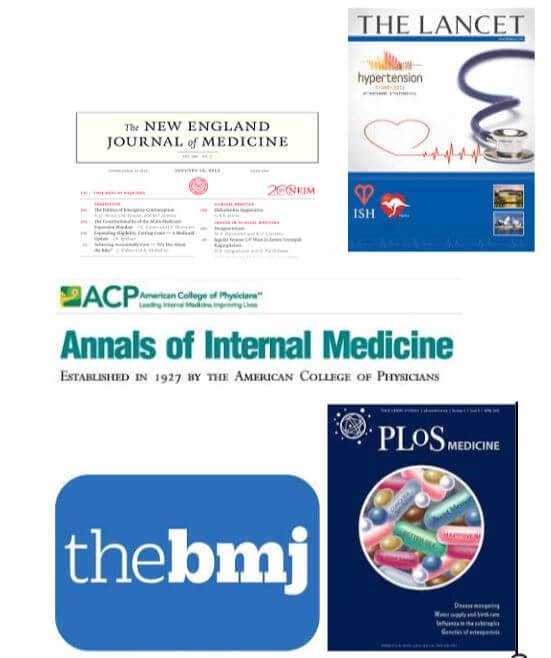
 In June of 2017, the International Committee of Medical Journal Editors, or ICMJE, released new requirements for data sharing statements, for submissions to their publications. The ICMJE represents the most well-respected and influential publications in the biosciences, including the New England Journal of Medicinethe LancetAnnals of Internal Medicinethe BMJ; and PLOS MedicineThese publications, and the many others which follow their lead, now require the inclusion of a data sharing statement in all submissions for publication. ICMJE publication editors may take these statements into consideration, when making editorial decisions. Researchers should also know that as of 1 January 2019, ICMJE requires inclusion of your data sharing statement at the time of trial registration 

In their guidance to researchers, the ICMJE notes that when it comes to data sharing, “undecided is not an acceptable answer.”   When pre-registering interventional trials on clinicaltrials.gov, if “Undecided” is selected for the “Plan to Share IPD” data element, a note now appears indicating that the ICMJE data sharing policy requires a “Yes” or “No” answer to this question. The “Plan to Share IPD” data element is optional on CT.gov, but is required by the ICMJE as part of registration information for interventional studies  Rather than remaining “undecided,” see the chart below to learn how to use Vivli in completing your ICMJE data sharing statement: 

ICMJE Question  How to respond, if using Vivli to share your data:  
Will IPD (and data dictionaries) be made available? Yes
 What data in particular will be shared? Final cleaned individual participant-level data, de-identified*
What other documents will be made available? Final protocol, statistical analysis plan, and the data dictionary. (Note: additional documents such as CRFs and analytic code may also be included.) 
When will data be made available? X months /years after study completion
With whom?

Anyone with the relevant skillsets to conduct the analysis,  who submitted an approved proposal on Vivli.

Proposals are submitted on Vivli.

For what types of analysis?  To achieve the aims and objectives in the scientific proposal as approved via Vivli.
By what mechanism will data be made available? Following an approved request, a data use agreement must be signed.   Data are made available via a secure research environment or download.


For more information or assistance in using Vivli to meet data sharing requirements, email suppport@vivli.org 

* Vivli partners with Privacy Analytics, to provide de-identification of data sets at a discounted rate for researchers who store and share their data on Vivli.  

Vivli Roundtable in Japan: One Year On: GDPR and Its Implications for Data Disclosure and Data Sharing  

Vivli will host roundtable discussions under the theme One Year On: GDPR and its Implications for Data Disclosure and Data Sharing. The meeting, scheduled for May 13, in Tokyo, Japan, will include discussion with experts in privacy and transparency of clinical trials.   

Speakers at the event include:  


Watch at your convenience the latest discussion in Vivli’s Webinar Series: Keys to Submitting a Quality Research Proposal to a Data Sharing Platform

Watch at your convenience the latest discussion in  Vivli’s Webinar SeriesKeys to Submitting a Quality  Research Proposal to a Data Sharing Platform from March 20th.

Have you ever wanted to conduct secondary research on clinical trial data to answer a research question but didn’t know how? Vivli hosted a lively webinar discussion with experts from the data sharing community on how to submit a quality research  proposal with all the information needed for clinical trial sponsors and independent review panels (IRP) to make a decision  about your request.  This webinar is focused on helping researchers create the best research proposal possible, including navigating the review process.  

Watch Now 


Key topics covered:  

 -What resources are available to help formulate your research proposals? 

-What are the key elements that sponsors and IRPs look for in a request? 

-What are some commonly overlooked issues in research proposals? 

-What hints and tips would our panel provide to researchers when developing their proposal? 

-What are some key reasons for application revisions? 

-What is the key to formulating a strong and testable hypothesis? 

Panelists include:  

Cynthia Holas, AbbVie

Dr. Sonali Kochhar, Wellcome Trust IRP member   

Georgina Humphreys, Wellcome Trust secretariat  

Joe Ross and Ginger Gamble, the YODA Project  

Moderator: Rebecca Li, Executive Director, Vivli  

Vivli profiled in data sharing progress report

A new article highlighting the progress made in sharing clinical research data, including a mention of the Vivli platform, was published in BIO IT World today.

“Vivli also has promise in making datasets findable and available through a central platform,” wrote authors Frank Rockhold, Vivli Senior Advisor, and Asba Tasneen. Both are based at the Duke Clinical Research Institute.

Read more: Imperative for Open Data Access and Sharing


Dr Rebecca Li Commentary in STAT

A new commentary, published in STAT by Dr. Rebecca Li, Vivli Executive Director, argues that data sharing has moved from a conversation of whether or not data should be shared to one focusing on how to share data. She writes that this change has been taking place over a number of years and has been propelled forward by new requirements from leading journals that ask for a data sharing plan at the time a new trial is registered.

Move clinical trial data sharing from an option to an imperative.