
News & Events

There’s more on Vivli than just clinical trial data

Did you know there’s more on Vivli than just clinical trial data? The majority of our repository of data comes from clinical trial data, but also includes significant numbers of platform trials, observational studies, and real-world evidence resources.
Vivli’s repository of data from nearly 7,000 research studies is available to search freely. Enter any relevant keyword and you’ll get a listing of pertinent studies of different kinds. Here are some recent search results using common keywords for studies that are not clinical trials: 

Observational: 198

Natural history: 26

Platform trial: 420

Explore our How To Guides to learn more about accessing and searching for data with Vivli. If you’d like to take your research further, you can get in touch with us for more information about specific studies or requesting access to data.

Vivli launches Portals to support more effective data sharing and data reuse

Vivli is delighted to announce the launch of our new Portals feature, designed to highlight therapeutic areas of interest to the research community. One of our first portals focuses on available data relevant to HIV/AIDS, a priority area of research focus for NIH. 

We’ve designed Portals to make data from HIV/AIDS clinical trials more visible and discoverable. Vivli’s repository of data is built on nearly 7,000 research studies across a wide range of research areas, and includes a growing number being shared by individual researchers. This data repository provides a valuable resource for researchers to both share and access data that can be used to accelerate the progress of scientific research. 

Are you an HIV/AIDS researcher? We’d love to hear from you, whether you’ve got data to share or are interested in exploring our data resources to request. Explore our new HIV/AIDS Portal and find out more about how Vivli can support your research.


This is funded in whole or in part with Federal funds from the Office of AIDS Research, National Institutes of Health, 1OT2DB000003-01, awarded to Vivli.

Vivli CEO Rebecca Li to speak at the NIDDK Central Repository 20th Anniversary Workshop

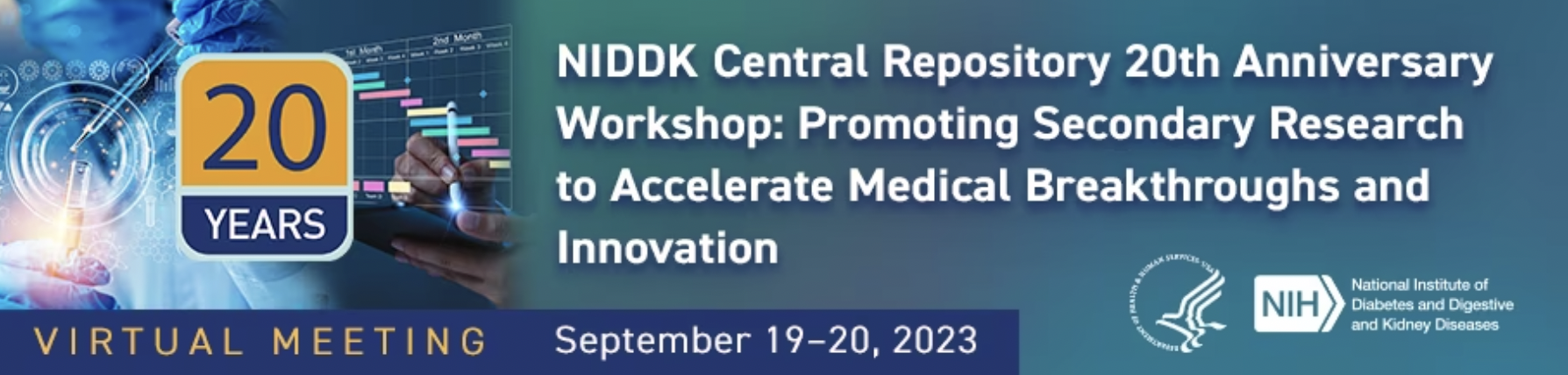
Vivli’s CEO, Rebecca Li, will speak at the NIDDK Central Repository 20th Anniversary Workshop: Promoting Secondary Research to Accelerate Medical Breakthroughs and Innovation. This online event, hosted by the National Institute of Diabetes and Digestive and Kidney Diseases, will take place on September 19-20, 2023.

Li will participate as a panelist in a discussion session on ‘Supporting NIDDK-Funded Research and Expanding NIDDK’s Data Ecosystem’. This session will focus on real-world examples in which NIDDK-funded research is strengthening the data ecosystem and accelerating medical breakthroughs through secondary research, and is scheduled to run on Wednesday, September 20. NIDDK has been making data available to researchers in the Vivli repository since 2022.

The 20th Anniversary Workshop will review the NIDDK Central Repository program from its early beginnings to its current state, and engage a diverse range of experts from the research community to share experiences and explore future possibilities. Registration is open until Tuesday, September 19 – find out more and register on the event website

Vivli to host workshop at 2023 Cochrane Colloquium

Vivli will host a workshop at the 2023 Cochrane Colloquium in London on September 4. The Cochrane Colloquium is an annual event for Cochrane in support of its mission to promote evidence-informed health decision-making. 

Vivli’s workshop will focus on “Practical advice for accessing patient-level data from a data sharing platform for evidence synthesis.” This session will provide: 

  • an introduction to the Vivli platform, including an overview of data available and hands-on group work on how to submit a request for data
  • an overview of first-hand experience of using patient level data using Vivli’s data sharing platform as a case study 
  • a discussion session focusing on some of the opportunities and challenges associated with using patient level data (for example: what to do when data needed to answer the hypothesis is not available via a single data sharing platform?)

This session will be a mixture of hands-on practice and opportunities to hear from researchers who have used the platform, patient advocates, and data providers. There will also be time for participants to ask questions about the data access process. 

Vivli Senior Director Julie Wood will be joined by Alan Chant, the patient representative on the Independent Review Panel; Catrin Tudur Smith from the University of Liverpool; and Rebecca Sudlow from Roche to facilitate this workshop. 

For more information on the 2023 Cochrane Colloquium and to register for this session, please see the event schedule. Please note that participation in this session is open only to registered Colloquium attendees. 


Vivli celebrates publication of 200th public disclosure

Vivli celebrates 200 public disclosures

Vivli is delighted to announce publication of the 200th public disclosure resulting from the research team’s work with data from the Vivli platform. 

Rebecca Li, the Chief Executive Officer of Vivli, congratulates all the research teams who have utilized data from the Vivli platform to advance health research through the re-use of valuable clinical trial data. She also acknowledges the organizations, individuals, and thousands of trial participants who have generously shared their data, making this milestone possible.

The Vivli repository houses data from nearly 7,000 trials,  representing the contributions of 1.8 million clinical trial participants. On average, Vivli public disclosures are cited approximately 2.2 times per publication and appear in a wide range of highly-ranked academic journals. 

For more information about how to share and re-use data on the Vivli platform, please visit our Resources page.


Vivli Senior Advisor speaks at CDISC 2023 Japan Interchange Program

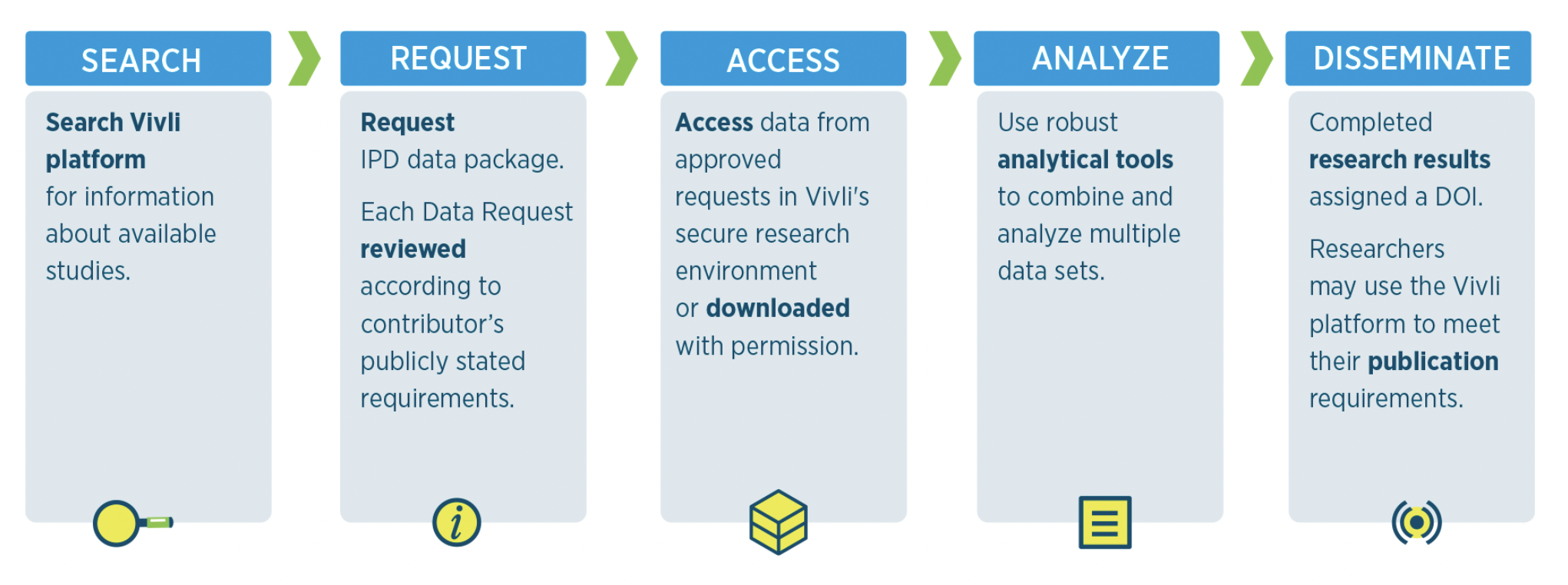
Vivli Data Request Process

Vivli Senior Advisor Azusa Tsukida spoke at Clinical Data Interchange Standards Consortium (CDISC) 2023 Japan Interchange Program on July 10.

Tsukida presented during the session on ‘Real World Data & Regulatory Presentations/Perspectives’. Her talk focused on the benefits of data sharing, using case studies from data contributors who are sharing high-quality data via the Vivli platform to enable access to researchers worldwide and contribute to scientific discovery.

CDISC works to develop and advance data standards to support transforming incompatible formats, inconsistent methodologies, and diverse perspectives into a coherent framework for generating clinical research data that is accessible, interoperable, and reusable. More than 80% of the data available in Vivli is formatted in the CDISC-SDTM standard.

Find out more about how you can request data from Vivli’s repository and help accelerate the progress of health research.

Vivli Researcher Spotlight: Dr. Fasihul Khan on the potential for biomarkers to predict outcomes for people with pulmonary fibrosis

Fasihul Khan, M.D., Ph.D., is a consultant at Glenfield Hospital, University Hospitals of Leicester NHS UK. Dr. Khan’s team submitted a research proposal to access Vivli to conduct analysis relevant to their topic, “A systematic review and individual patient data meta-analysis of physiological biomarkers in idiopathic pulmonary fibrosis”. The team’s completed research has been presented to the research community at conferences and in publications including American Journal of Respiratory and Critical Care Medicine. He sat down with Vivli to tell us more about accessing individual participant data to advance his research, and the potential for biomarkers to predict outcomes for people with pulmonary fibrosis.

Please tell us more about your research – what led you to want to research this particular topic?

So my area of interest is pulmonary fibrosis, which is a condition causing scarring of the lungs. Pulmonary fibrosis is a relatively rare condition, and therefore the number of studies in this area are limited, although expanding rapidly.  I was keen to synthesize some of the existing information that was already available. I wanted to perform a systematic review, specifically looking to see whether there are blood biomarkers that can predict outcomes in patients with diagnosed pulmonary fibrosis. When I started searching the literature, it very quickly became apparent that there were several published studies, but actually the data and the way the studies were reported were very heterogeneous.  Individually the studies yielded inconsistent results, utilized data-dependent thresholds, and frequently did not adjust for confounders. Therefore, I sought individual participant data which helped overcome these limitations and enabled robust data analyses to be performed leading to reliable conclusions. 

Could you talk about what it was like to work across multiple data-sharing platforms; how did you handle that?

This was not straightforward! I created summary estimates from each study separately on the different platforms in Vivli and in CSDR, then imported them manually onto my own database. I then used additional software to pool the summary estimates. Having the data all  in one place would have saved me a lot of time and stress!

Not a lot of researchers have the perseverance to do what you did. What advice would you give to researchers before they start off? Things you wish you’d known before you started?

I think it’s important to consider the project as a whole. It is highly likely the process will take much longer than you think, and that’s not necessarily any individual or organization’s fault. You need to have a clear understanding with contingency plans for each stage, and give yourself plenty of time! Be clear about your research question, and whether individual participant data are likely to improve your research, before committing to the additional effort. Speak to others who have been through the process of acquiring individual participant data, and your institution to understand timescales for data sharing agreements as these are likely to be time consuming and potential limiting factors. 

Once you were able to access the individual patient data, were you able to get past the reporting limitations and find what you needed? 

Absolutely; once we had the raw data, we were able to perform our analysis and produce some very meaningful results, which we have  subsequently published in two journals. The first was a blood biomarker paper in the European Respiratory Journal which was the first blood biomarker study in pulmonary fibrosis to utilize this approach, and provides robust estimates of the association between matrix-metalloproteinase 7 and disease progression.

The second paper was published in the American Journal of Respiratory Critical Care Medicine. In this paper, we looked at change in FVC which is a lung function measurement used to assess progression in pulmonary fibrosis. All interventional clinical trials measure FVC as an endpoint – typically at 12 months, but patients have additional FVC measurements at baseline, 3, and 6 months. The purpose of our research was to evaluate whether short term changes in FVC i.e. over three-months, are associated with overall mortality. In other words, can we shorten clinical trials by finding an earlier signal than the 12 months FVC change that is currently accepted by regulators. Since the association between short term FVC change and mortality was not reported in any clinical study, we needed the individual participant data to model this association. Indeed, we were able to find that three-month FVC change is associated with mortality, and perhaps more importantly a treatment effect could be observed between treatment and placebo arms at three-months. The findings of this study have been well received by the research community, and have already been adopted into the design of an adaptive trial in IPF. Lots of hard work, but worth it as the results are likely to generate further research which ultimately will hopefully impact patients in a positive manner!  


Vivli CEO Rebecca Li to Speak at FAIR Data Symposium at BIO-IT World Conference and Expo

Vivli’s CEO, Rebecca Li, will speak at the FAIR Data Symposium as part of the Bio-IT World Conference and Expo on May 16.

Li will discuss how to apply FAIR principles to the access of data from completed clinical trials, including using the appropriate technical and governance infrastructure. Platform architecture must include clear, computable metadata to facilitate findability and interoperability. Her talk will focus on Vivli as a use case and cover:

1) Principles that guided Vivli’s unique design choices as a FAIR trial data sharing platform

2) How Vivli balances the rights and interests of study participants and investigators with the needs of data requesters and the societal benefit of greater data sharing.

3) How Vivli has evolved with the needs of the ecosystem over time.

Learn more here.

Vivli is hiring a Clinical Research Manager

VIVLI, the Center for Global Clinical Research is seeking a Clinical Research Manager.

Vivli is a mission-focused non-profit and to help manage our continued growth, we are looking for a seasoned clinical research manager to join the operations team. The operations team supports researchers seeking to access datasets from contributors and provides support for data contributors.

Location: Remote, with a preference for East Coast or European working hours.

Responsibilities will include but not limited to:
• Manage day-to-day data request review process for specific requests.
• Work closely with Vivli end users to ensure success of the use of the platform
• Vivli platform QA
• Support the Vivli resource library.
• Lead in on-boarding new members
• Perform other duties when requested

Qualifications:
• Minimum 5 years prior experience managing data transparency processes, either at an existing repository, platform or as a data contributor
• 2-3 years experience with vendor management
• Experience in supporting researcher and/or data contributors in fulfilling data requests
• Understanding of clinical trials processes and/or clinical data management preferred
• Excellent written and oral communication skills and interpersonal skills
• Prior experience with process improvement a plus
• Computer proficiency in MS Office, Excel, PowerPoint, Sharepoint, Dropbox etc.
• Excellent organizational skills and attention to detail
• Ability to manage projects and resources
• Bachelor’s degree in the health profession, science, IT or business field

To apply, send a cover letter and CV to hr@vivli.org.

Vivli Board names Rebecca Li CEO

Vivli announced that its Board of Directors has promoted Rebecca Li to the position of CEO. Li previously held the position of Executive Director and has been with the Vivli since its founding when it launched as a project from the MRCT Center of the Brigham and Women’s Hospital and Harvard.

“Rebecca has overseen the extraordinary growth of Vivli from the start and we are excited that she will continue to lead Vivli through the next phase of growth as we aim to go even further in our mission to make clinical trial available for research. She has demonstrated herself to be an exceptional team leader and strategic thinker with a clear vision for how we will develop globally in the coming years,” said Dr. Michael Stebbins, Vivli’s Board Chair.

“I am privileged to lead Vivli and envision further expanding our successful platform technology into Europe and Asia as we enter our next phase of innovation and growth” said Dr. Rebecca Li.

Vivli was founded in 2018 as a non-profit organization that is currently the largest individual participant-level (IPD) data sharing platform focused on sharing clinical trial data serving the international research community.